Low Yield or Low Flow? A Well Test in Deep River
Every inspection teaches me something. On a recent inspection of a home with a private well in Deep River, the lesson wasn't about the well at all. It was about patience, and about not jumping to conclusions before all the evidence is in.
The Test Started Strong, Then Fell Off a Cliff
A well yield test shows how much water a well can deliver over time. For a home buyer, that matters. A well that can't keep up with a household's demand can mean low pressure, a pump that runs dry, and expensive fixes down the road.
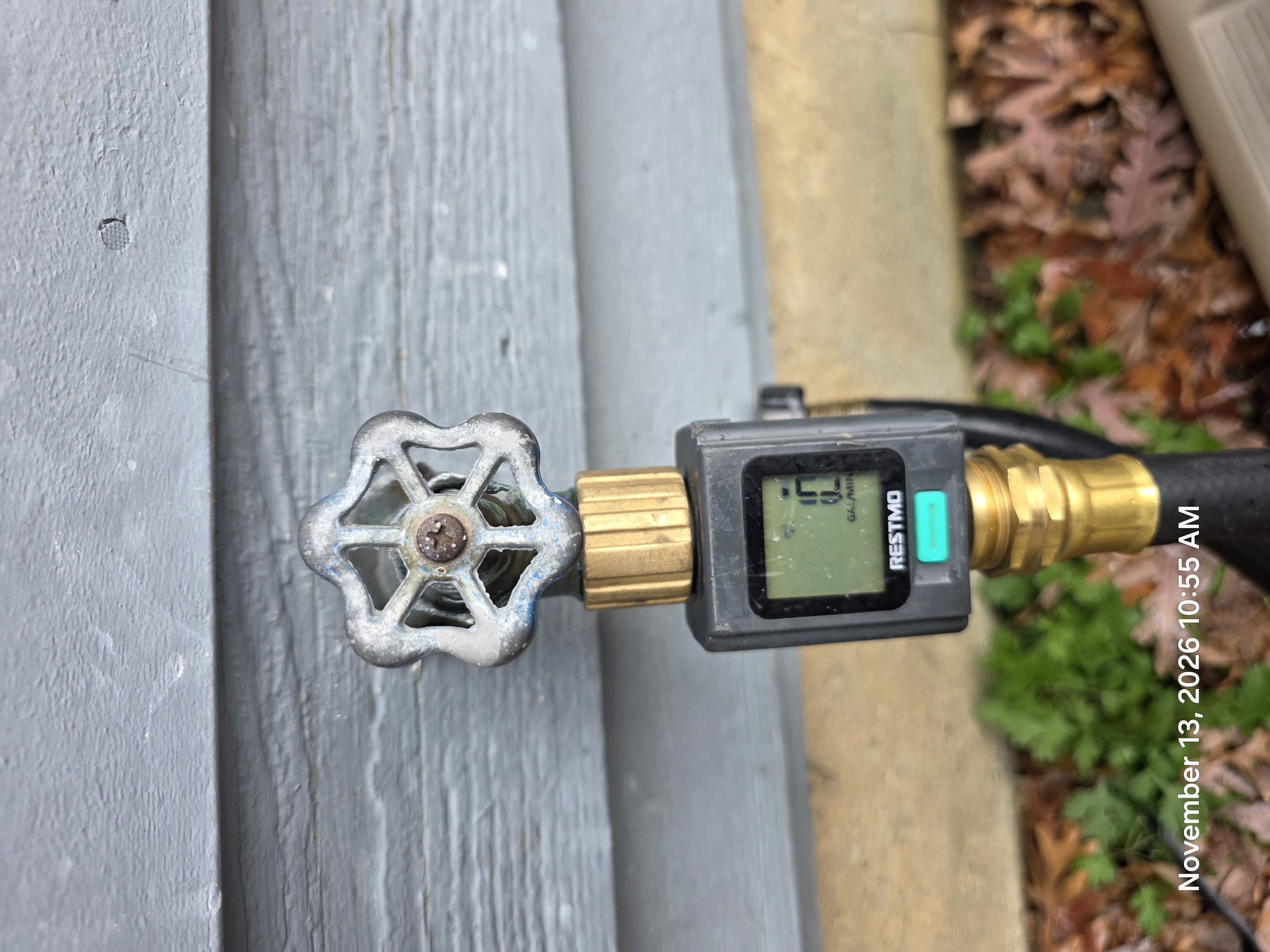
I hooked up my hose and started the test. The flow began at around 5 gallons per minute, which is healthy. But within a few minutes, after only about 17 gallons, it dropped below 1 gallon per minute.
My first thought was, "Wow, this well has a serious problem."
A Conversation With the Buyer
Partway through the test, my client came down to check in and asked how things were going. I told her honestly that it looked like there might be a problem with the well.
She asked a great question: what do you do about a low yield well? I told her the first step is always to talk with a licensed well contractor. I'm a generalist, not a well specialist. I mentioned that I've seen contractors install a storage tank in the basement for low yield wells, so water can build up between uses. That's one option, but certainly not the only one, and a contractor is the right person to recommend a solution.
I also told her I'd try to get the well completion report, which records details like the well's depth and its yield when it was drilled. I'd already called the local health department, but they had nothing on file. That's when she surprised me. She thought the report was in the paperwork she'd picked up from town hall before the inspection. A client who does her homework is a home inspector's best friend.
Then I Noticed the Sediment Filter
While the test ran, I noticed the home had a whole house sediment filter, and it was filthy. It clearly hadn't been changed in a long time.
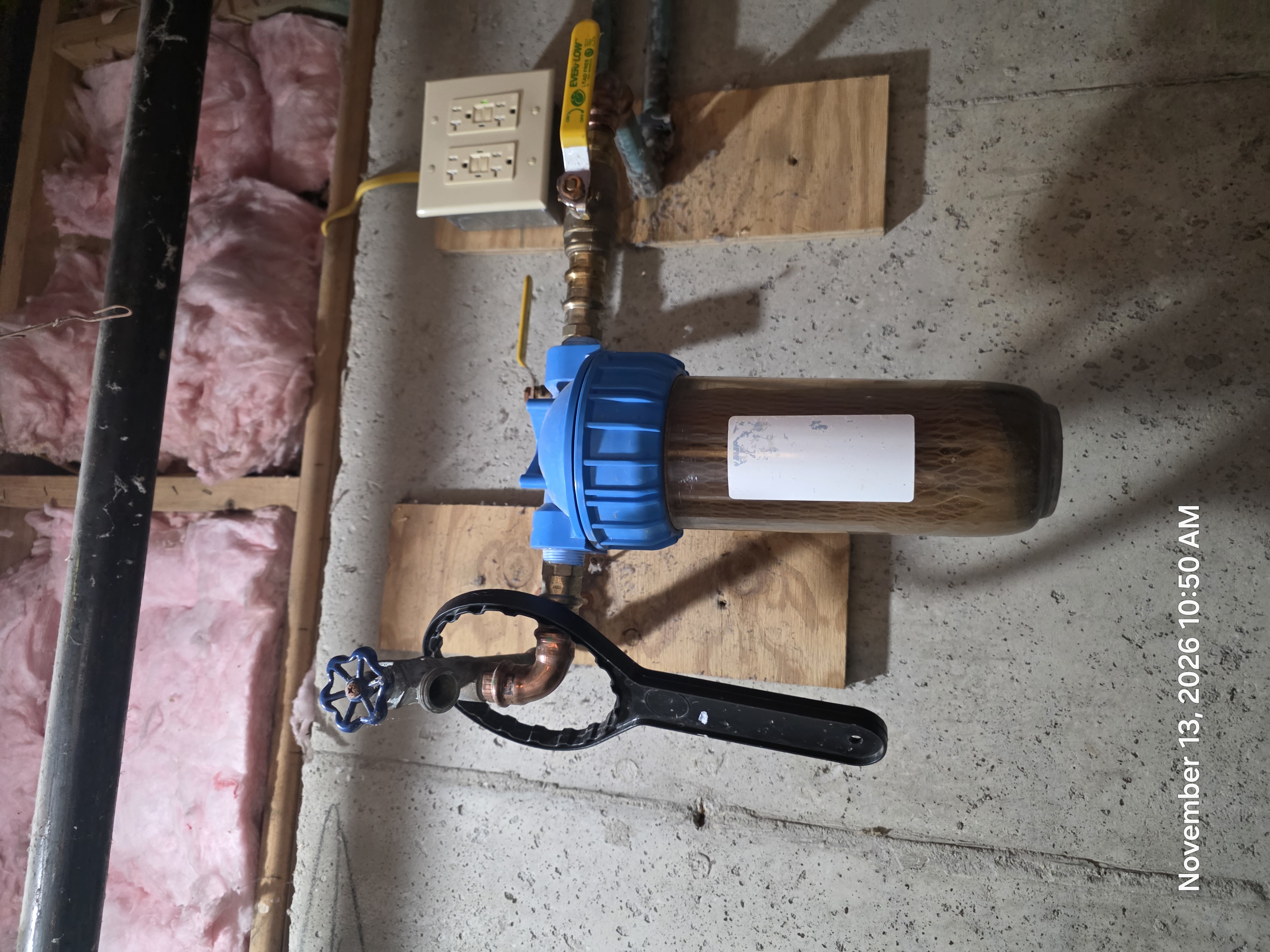
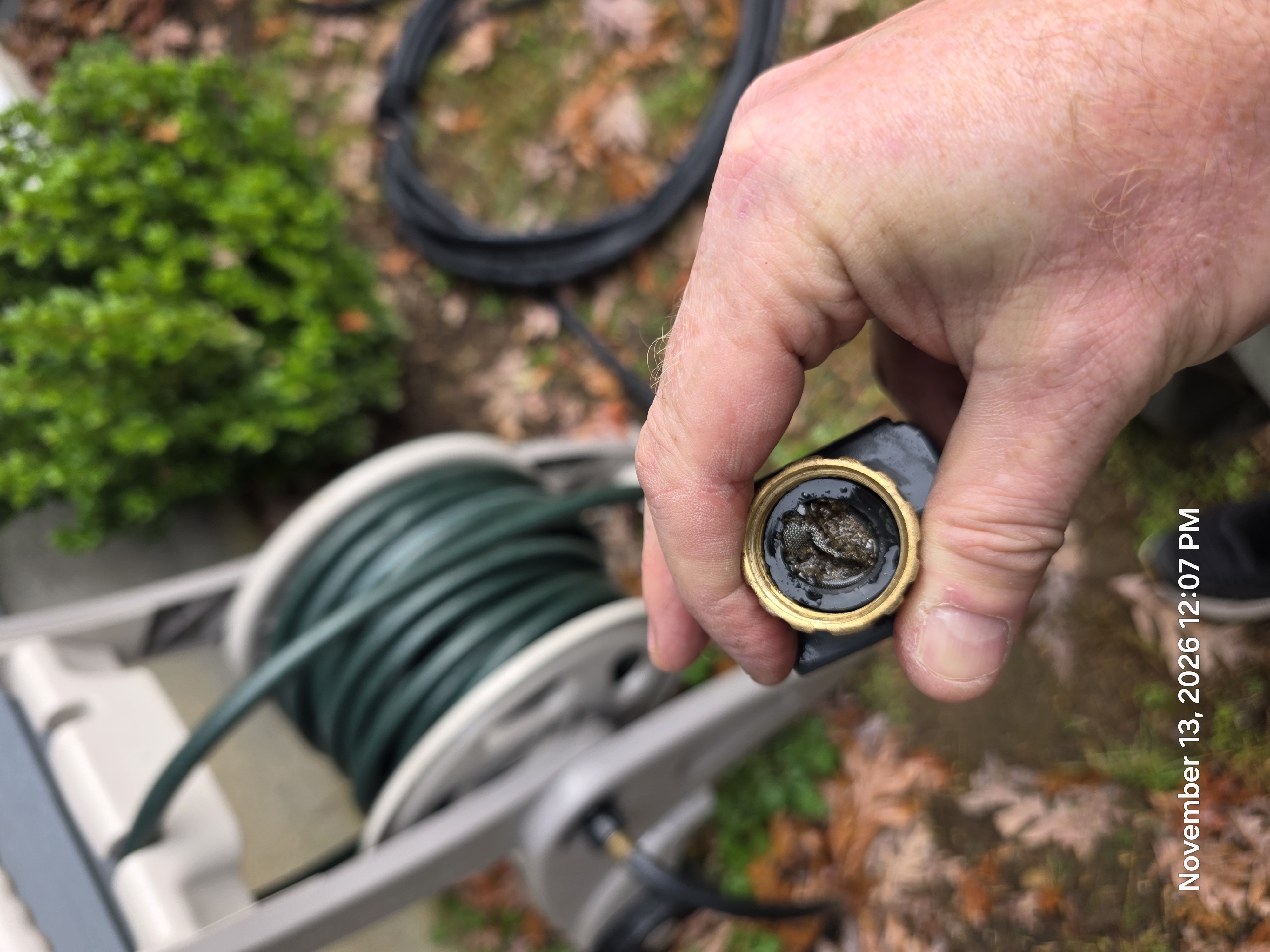
That got me thinking. What if sediment from the well was getting into my own test setup and choking the flow? My hose has a mesh trap at the connection. If that screen was clogging, my readings would drop no matter how well the well was performing.
I restarted the test and let it run for over an hour. It leveled off at about 1.4 gallons per minute. When I finished and unhooked the hose, there it was: sediment packed into the mesh trap.
So I ran the spigot again with no hose and no trap attached. The flow came back above 3 gallons per minute.
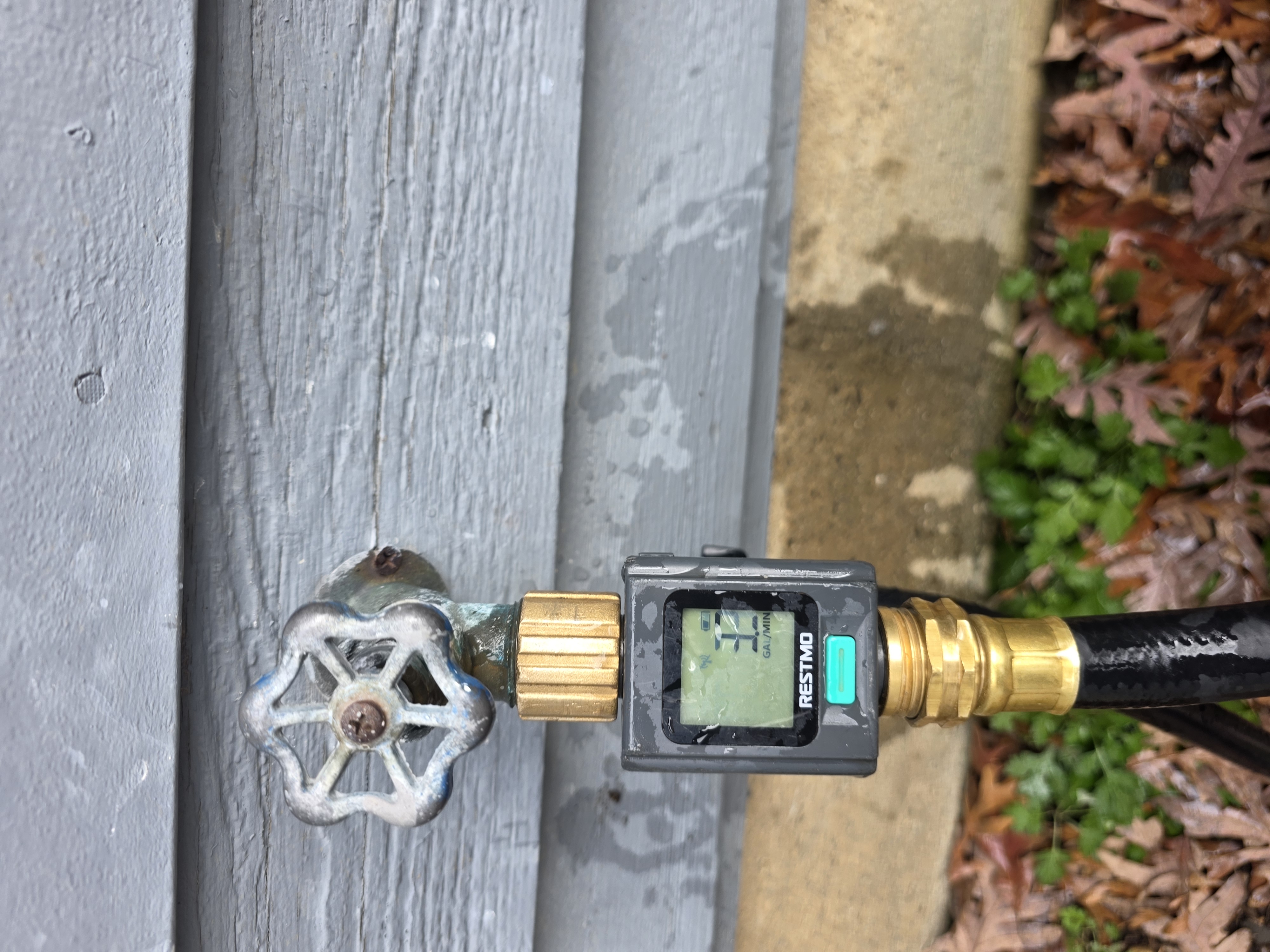
That difference told the story. The low readings weren't from the well. They were caused by sediment clogging my line.
The Other Clue: A Run Dry Shutoff
There was one more detail worth flagging. Attached to the pressure control switch was a run dry protection device. It automatically shuts the pump off if the well runs out of water, which protects the pump from burning out.
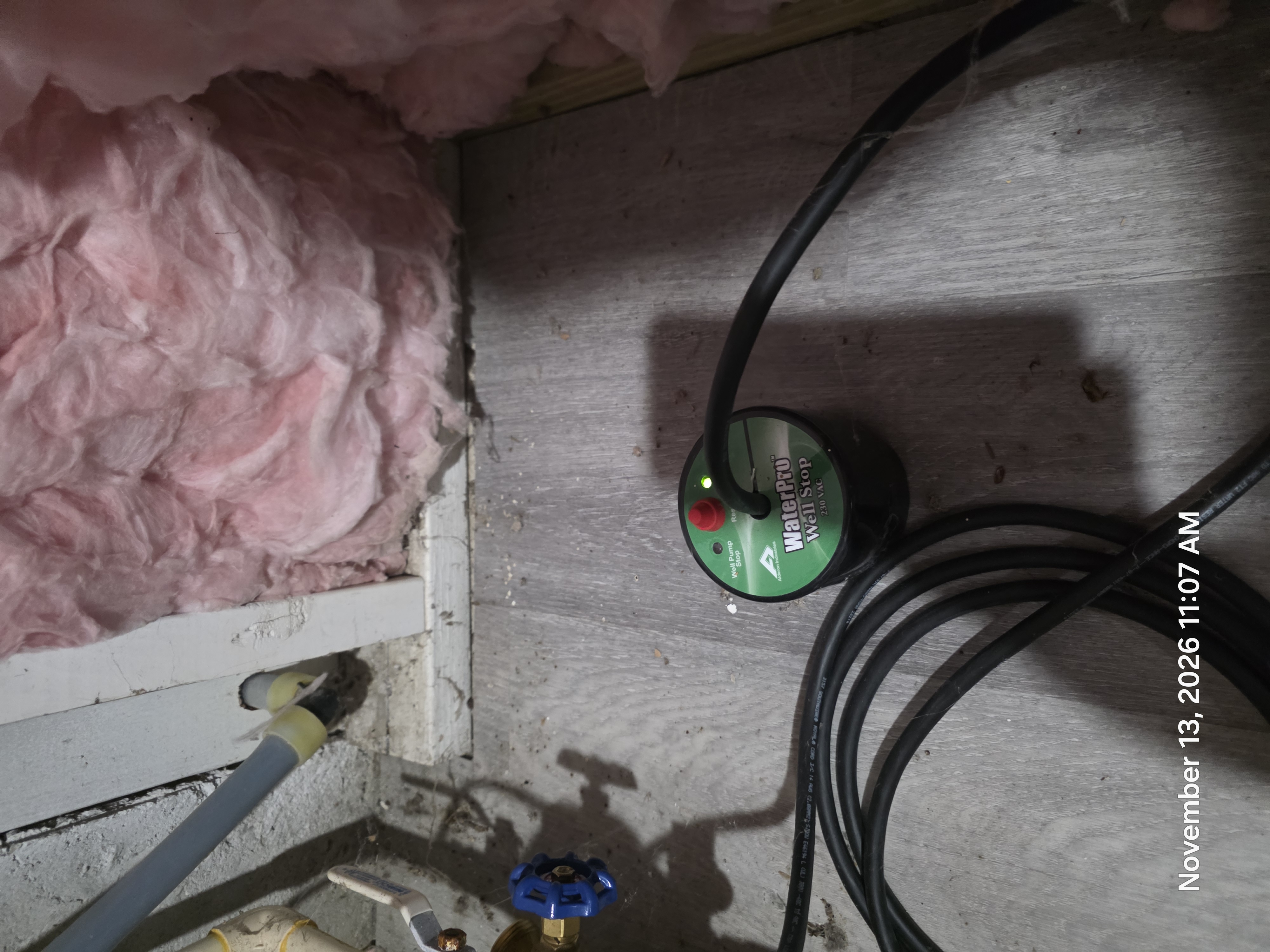
That device doesn't prove the well has a problem. But it's a fair question for the seller: why was it installed? Has the well ever run dry? I included it in my report so my client could ask.
Good inspecting means doing both. Don't panic over a bad number before you understand it, and don't wave away the clues that deserve a second look.
Owning It in the Debrief
At the end of the inspection, I sat down with my client and told her plainly that I'd probably jumped the gun earlier. I was eager to share what I knew at the time, and I raised an alarm before I'd finished the test.
Then I gave her the good news. The well appeared to be performing, and the bigger issue was sediment. The filter needs to be changed, and it may need changing more often than usual. The house sits next to a bog, and the water there may simply carry more sediment than water in other parts of Connecticut.
Takeaways for Buyers and Agents
- A low yield reading isn't always a low yield well. Clogged filters, screens, or test equipment can all restrict flow.
- Sediment filters need regular maintenance. A neglected filter can make a healthy well look weak, and in high sediment areas it may need changing more often.
- Watch for run dry protection devices. They're a smart safeguard, but they're also worth asking the seller about.
- Get the well completion report. Check with the health department, and check the town hall records too.
- Talk to a well contractor about real yield concerns. A home inspection screens for problems; a specialist diagnoses and fixes them.
The best inspections aren't the ones where everything goes smoothly. They're the ones where I slow down, question my first impression, and give my client the full picture. I don't rush.
Buying a home with a private well in Connecticut? I offer well yield testing, water quality testing, and septic inspections alongside your home inspection.
I work for you. Not your agent. Not the seller. Not the deal.