Lead Service Line in a Bridgeport 3-Family: Deal-Breaker?
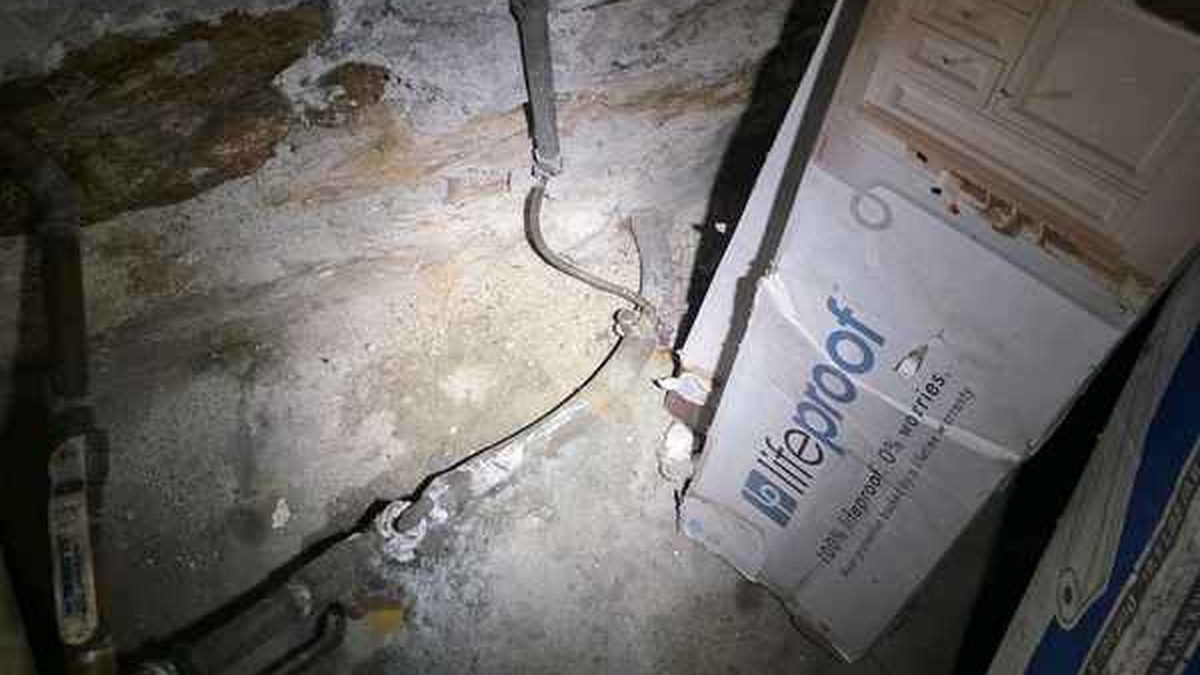
My client was under contract on a 1907 three-family home in Bridgeport, CT. In August, during the home inspection, I went down to the basement and found what looked like a lead service line: the pipe that carries water from the street into the house. Suddenly my client had a decision to make, and the clock on his purchase was running.
How to Tell If You Have a Lead Service Line
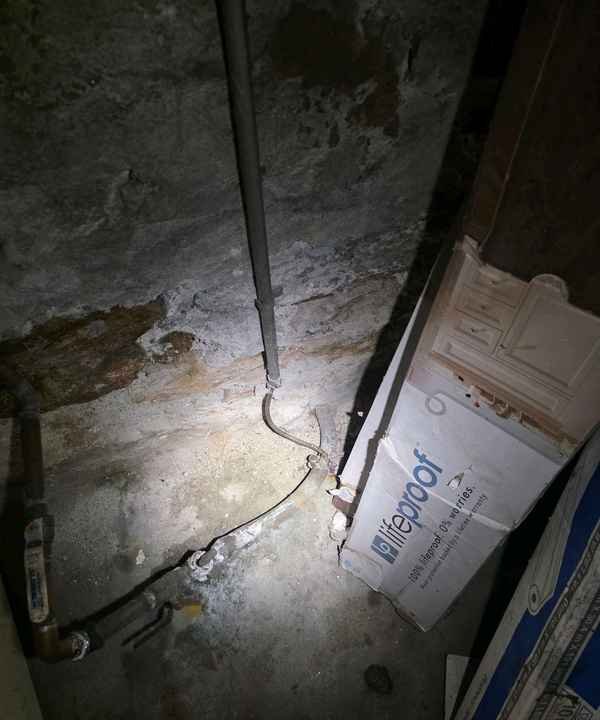
Look where the water line enters the house, usually in the basement near the main shutoff. On this inspection, three things pointed to lead: the dull gray color, a soft-looking pipe that curves rather than turning at sharp fittings, and a rounded, bulb-shaped joint where it connects to the house plumbing. That bulb-shaped joint is a classic feature of older lead piping, and in a house built in 1907, original lead piping is no surprise.
Live With It, Fix It, or Walk Away?
Finding a lead pipe raises the question every buyer faces after a significant inspection finding: is this a problem, and if so, is it one I can live with, fix, or do I need to walk away?
Lead can leach from the pipe into the water, especially when water sits in the line, and young children and pregnant women are most at risk. I walked my client through what that could mean. But the pipe alone couldn't answer his question. He needed to know how much lead was actually reaching the tap. So I recommended testing the water for lead before closing, and he agreed.
First-Draw or Flush Test? The Decision Within the Decision
Agreeing to test was the easy part. Deciding how to test took more thought. There are two common ways to sample tap water for lead, and my client and I weighed both.
First-draw test: the sample is taken first thing in the morning, before anyone uses any water, so it captures water that has sat in the pipes overnight.
- Pro: the more accurate picture of worst-case exposure, since standing water has had the most time in contact with the pipe.
- Con: in a three-family, every unit has to hold off on using water until the sample is taken. That means coordinating with tenants and an early-morning trip back to the property, which is hard to arrange during a real estate transaction.
Flush test: the sample is taken after the water has run.
- Pro: it can be collected at almost any time, including during the inspection itself, with no coordination with the occupants.
- Con: because the water has been running, it can read lower than a first-draw sample, so it isn't a worst-case number.
For an occupied three-family on a purchase timeline, convenience won out. We decided the flush test made the most sense, and I collected samples from the tap during the inspection and sent them to a certified lab.
The Lead Test Results
The lab analyzed the samples using EPA Method 200.8, a standard laboratory method for measuring metals like lead in drinking water. The result:
- Lead: 4.24 µg/L (micrograms per liter, the same as parts per billion)
- Lab's reference limit: 15 µg/L, the EPA's action level for lead
Lead was present, but well under the action level, at less than a third of it.
The Decision: He Went Ahead
With a real number in hand instead of a worry, my client had what he needed to make the call. The result was low, and he felt reassured. He decided to proceed with the purchase.
That's what good information does at this stage. The finding didn't change, but the uncertainty did. A suspected lead pipe went from a possible deal-breaker to a known, measured condition he was comfortable living with.
What I'd Tell the Next Buyer
- Check the service line in pre-war multifamilies. In a 1907 three-family like this one, the pipe at the foundation wall told the story before any test did.
- Don't decide on the pipe alone. The pipe tells you lead is possible. The lab tells you how much. Make the live-with-it, fix-it or walk-away call on the number.
- Talk through the test choice. A first-draw test gives the more conservative number; a flush test fits an occupied building and a tight timeline. Know which one you chose when you read the results.
Water testing doesn't always mean a private well. For another buyer who had to decide what a lab result meant for their purchase, read about a hidden well and salty water in Wilton.
Public Water Quality Testing
Add-on service, includes lead
Buying an older home in Bridgeport? Get the facts you need to decide before you close. Add public water quality testing when you book your Maxim home inspection. Learn more about our work in Bridgeport, CT.
Schedule Your Inspectionor call/text 203-456-9500