
Leaning Retaining Wall in Wolcott, CT: Walk Away?
In September, a client hired me to inspect a recently renovated home in a lakeside community in Wolcott, CT. She was ready to buy. But as soon as I started the exterior portion of the inspection, one feature stood out: a large retaining wall running along the edge of the property line. By the end of the day, that wall would put her purchase in question.
A Retaining Wall That Made the Lot Work
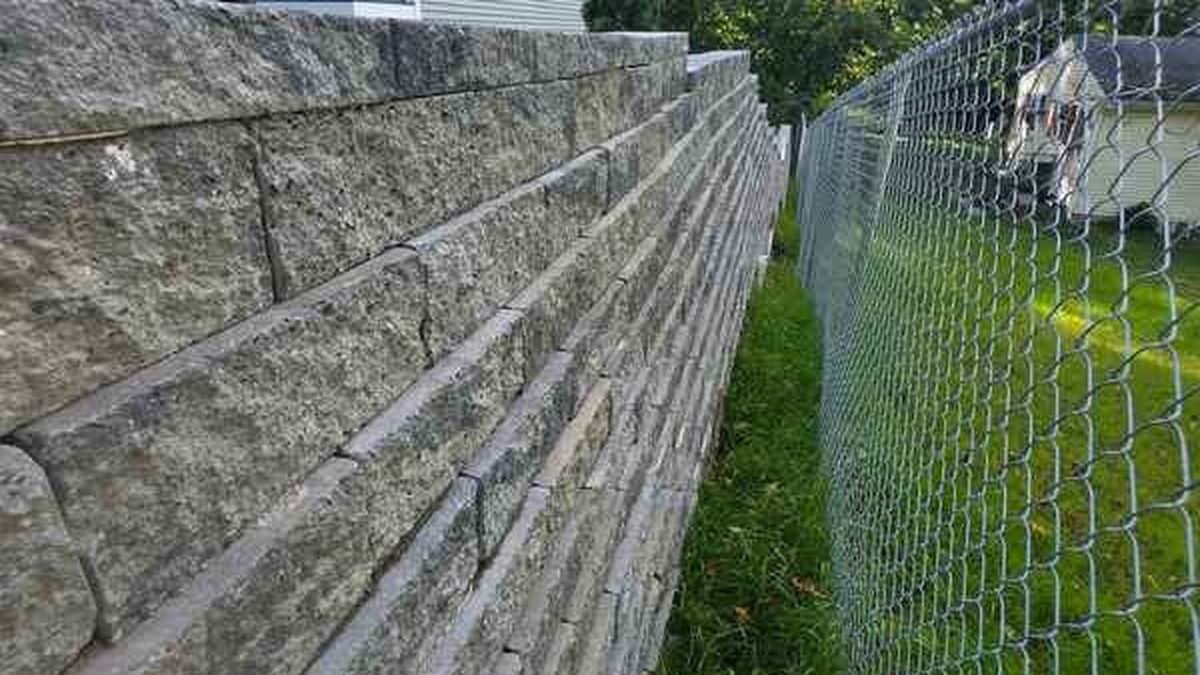
The wall let the builder expand the driveway and create more usable front yard on a sloped lot. It's an attractive improvement, and on a renovated house, buyers tend to assume work like this was done right. Walking along the property line, I found the wall stood 6 to 8 feet tall in spots. A wall that size is holding back a lot of soil, and a lot of weight.
Warning Signs of a Failing Retaining Wall
Several things set my alarm bells off on this wall:
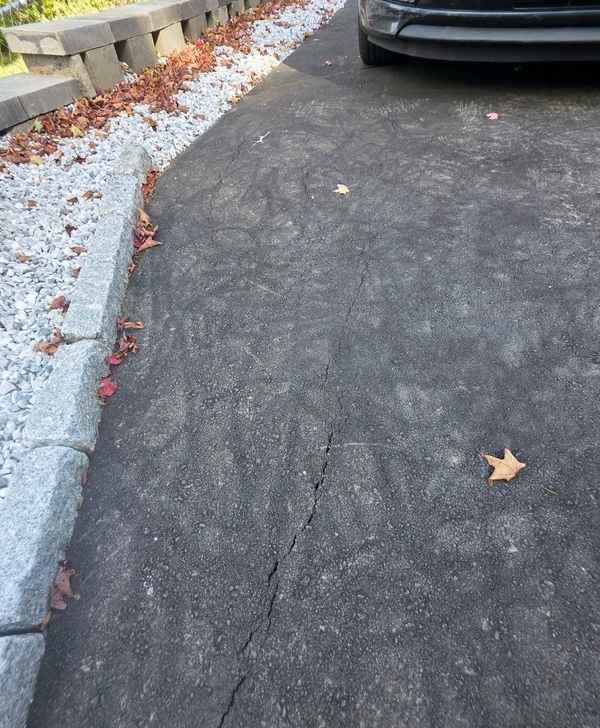
- Cracks in the new asphalt above it. The driveway had recently been paved, yet it already showed long cracks, what I call stretch marks, running parallel to the wall. Fresh pavement shouldn't crack like that. To me, it pointed to movement in the ground the wall is supposed to hold.
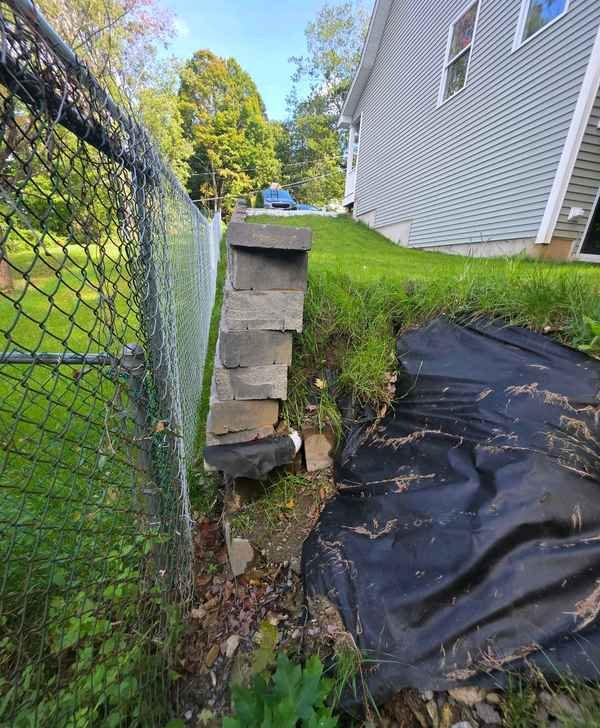
- No visible drainage at the base. Where the wall ended, it seemed to just stop, with no sign of design or thought toward drainage. Water that can't drain builds pressure behind a wall.
- The wall appeared to lean. Sighting along its length, it looked out of plumb.
- Its height. For a wall 6 to 8 feet tall, I wanted to know two things: did an engineer design it, and did the town permit it?
What I Told My Client
When the inspection was done, we sat down in the kitchen to debrief, and I laid out my concerns about the wall. I was honest about my role: I'm a generalist, not a specialist. I couldn't certify whether the wall was built correctly. What I could tell her was that it showed deficiencies that needed a closer look by the right professional.
I recommended two things: confirm the wall was designed by an engineer, and check whether the town had issued permits for it. I also gave her the names of a few structural engineers she could contact.
Live With It, Fix It, or Walk Away?
Now my client faced the question every buyer faces after a significant finding: is this a problem, and if so, is it one I can live with, fix, or do I need to walk away?
With a retaining wall, that question is hard to answer from the outside. A structural engineer could evaluate it, but that meant more money spent before closing, and my client was reluctant to pay to investigate what was really someone else's problem. That's an understandable position. The other route to an answer was paperwork: if the seller could produce engineering and permits for the wall, that would go a long way.
The Decision: She Walked Away
The seller couldn't provide the documentation. No engineering, no permit to show. That made the decision easier. Without proof the wall was designed and approved, and with visible signs of movement, my client decided to walk away.
Walking away isn't a failure. It's one of the three legitimate outcomes, and sometimes it's the right one. Several months later, she reached out to me again to inspect another property.
What I'd Tell the Next Buyer
- Look above the wall, not just at it. Cracks in new pavement or settling in the yard above a retaining wall can be the first sign the wall is moving.
- Ask for engineering and permits early. For a tall wall, request the documents while you're still within your inspection period, before you decide whether to spend money on an engineer.
- Missing paperwork is information. When a seller can't document a major structure like this, that tells you something, and it can make the decision for you.
Not every story ends with walking away. For a buyer who got a reassuring answer and went ahead, read about a lead service line in a 1907 Bridgeport three-family.
Home Inspections
Know what you're buying
Buying a home in Connecticut? A thorough home inspection gives you the facts to decide whether to live with it, fix it, or walk away before you close.
Schedule Your Inspectionor call/text 203-456-9500